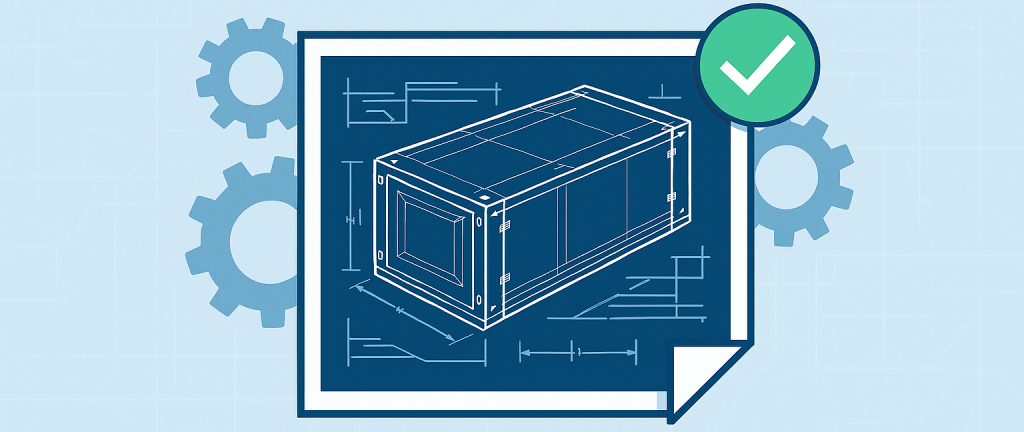
We are pleased to announce the successful completion and submission of the WP2 Specification Sheet. A key milestone that establishes the technical and methodological backbone for the next phases of the project.
Far from being just a formal deliverable, the Specification Sheet represents a comprehensive engineering blueprint, consolidating requirements, design principles, and process definitions into a single, harmonised document that aligns with all project partners and their experiences in the respective fields to date.
What Is Inside the Specification Sheet
The WP2 Specification Sheet defines how the core components will be designed, manufactured, and evaluated. It combines technical requirements with validated design concepts and simulation insights, ensuring that all subsequent development builds on a consistent and robust foundation.
A central feature of the document is the detailed specification-definition of the three key use cases:
- Battery Case
- Rear Carrier Box
- Vehicle Body
Importantly, the first two use cases will be developed for two distinct vehicle approaches:
- The IFEVS vehicle concept, representing a flexible, modular design philosophy
- The StreetScooter D17 platform, reflecting a proven, real-world industrial reference for last-mile delivery vehicles
By addressing both approaches, the Specification Sheet ensures that the developed solutions are not limited to a single architecture but instead demonstrate adaptability across different vehicle platforms and industrial contexts.
From Requirements to Engineering Detail
The Specification Sheet translates high-level concepts into concrete, measurable engineering requirements. In total, it consists of 343 individual requirements across 57 pages, reflecting the depth and level of detail achieved.
These requirements were not defined in isolation, but rather through intensive collaboration with the entire consortium, including numerous large group workshops where all partners contributed their insights and expertise. This ensured that the final document reflects a fully aligned and jointly validated technical baseline.
Among others, the Specification Sheet includes:
- Geometrical and functional definitions for each use case component
- Material specifications tailored to advanced high-strength steels (AHSS), including constraints related to forming and joining
- Manufacturing process chains, covering laser cutting, bending, punching, and welding
- Interface definitions, ensuring compatibility between components and production steps
- Simulation-based validation criteria, linking design decisions to structural, thermal, and functional performance
These elements ensure that every design is not only conceptually sound but also technically feasible and verifiable.
The Value of a Strong Specification
In complex, multi-partner engineering projects, a clear and well-structured Specification Sheet is critical for the success. It provides:
- Alignment across all partners and disciplines
- Clarity on requirements, assumptions, and interfaces
- Traceability of design decisions
- Reduced risk of rework and integration issues
- A benchmark for evaluation during virtual design phase using CAD & CAE tools
By consolidating all relevant information at an early stage, the Specification Sheet enables teams to move forward with confidence, ensuring that development activities remain coherent, efficient, and goal oriented.
A Solid Foundation for the Next Steps
With the WP2 Specification Sheet now finalised, the project moves into the next phases with a clear, shared understanding of what needs to be built and how. The defined requirements and dual vehicle approach ensure that upcoming developments are both technically robust and broadly applicable.
This milestone highlights the importance of strong preparation and structured engineering—and sets the stage for successful implementation in the phases to come.